Business Guide
Commercial Hyperbaric Chamber Installation: What to Expect Before, During, and After Delivery
Purchasing a commercial hyperbaric chamber is a major investment, but the process doesn't end when the order is placed. Understanding what happens before, during, and after installation helps ensure a smoother launch and gets your clinic treating patients sooner.
Everything You Need to Know Before Your Chamber Arrives
Purchasing a commercial hyperbaric chamber is a major investment, but the process doesn't end when the order is placed. Understanding what happens before, during, and after installation helps ensure a smoother launch and gets your clinic treating patients sooner.
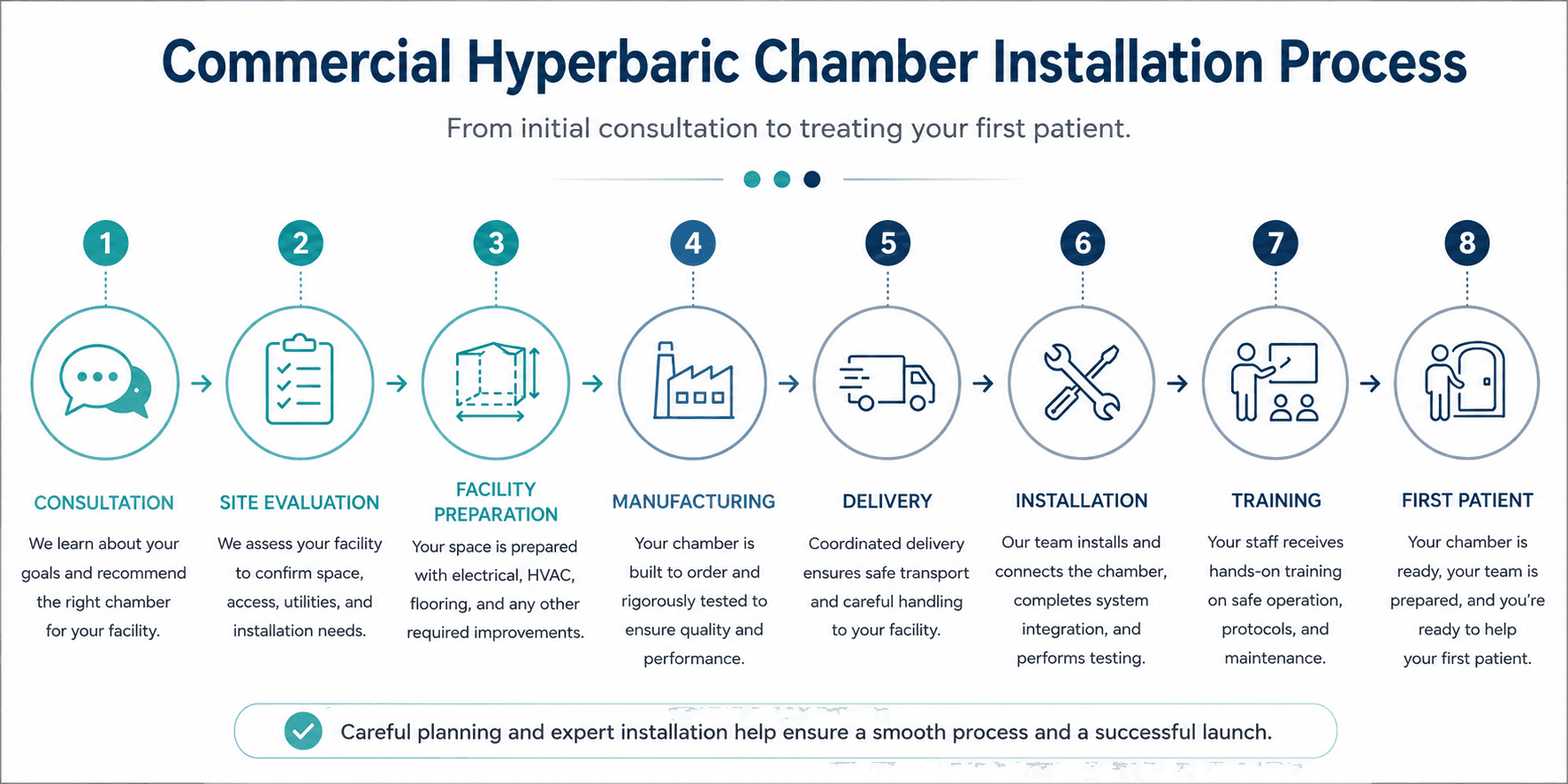
Once you've selected the right commercial hyperbaric chamber, the next phase is preparing your facility for installation.
If you're still evaluating equipment or budgeting for your project, we recommend reading our Commercial Hyperbaric Chamber Cost: The 2026 Price Guide before moving forward. Understanding the total investment helps you plan for everything from equipment and installation to facility preparation and training.
Fortunately, installation is far more predictable than many first-time buyers expect. With proper planning and coordination, most projects follow a structured process that minimizes disruption and keeps your opening timeline on track.
Whether you're adding hyperbaric oxygen therapy to an existing medical practice or building a new wellness center from the ground up, understanding each step in advance helps avoid unnecessary delays. If you're still in the planning phase, our guide on How to Start a Hyperbaric Oxygen Therapy Business in 2026 walks through the process of launching a commercial HBOT practice from concept to opening.
Step 1: Site Evaluation
Before manufacturing, shipping, or installation begins, your facility should be evaluated to confirm it can safely accommodate the chamber.
One of the first decisions that affects your installation requirements is the type of chamber you choose. If you haven't made that decision yet, read Monoplace vs. Multiplace Hyperbaric Chamber: Which Is Right for Your Facility? to understand how chamber size, patient capacity, and intended use influence facility planning.
Important considerations include:
Available floor space
Doorway and hallway clearance
Ceiling height
Structural floor capacity
Electrical service
HVAC capacity
Accessibility
Patient flow
Every facility is different, which is why site planning should occur early in the project.
Step 2: Preparing the Installation Space
Many commercial hyperbaric chambers can be installed within existing clinical space, while others may require light remodeling.
Preparation may include:
Dedicated electrical circuits
Improved lighting
Wall protection
Floor upgrades
Interior finishes
Network connections for monitoring equipment
Additional ventilation where appropriate
Planning these improvements before delivery keeps installation moving efficiently and helps avoid costly delays later in the project.
Planning your facility before delivery is one of the easiest ways to reduce installation delays and avoid unexpected costs.
Step 3: Delivery Day
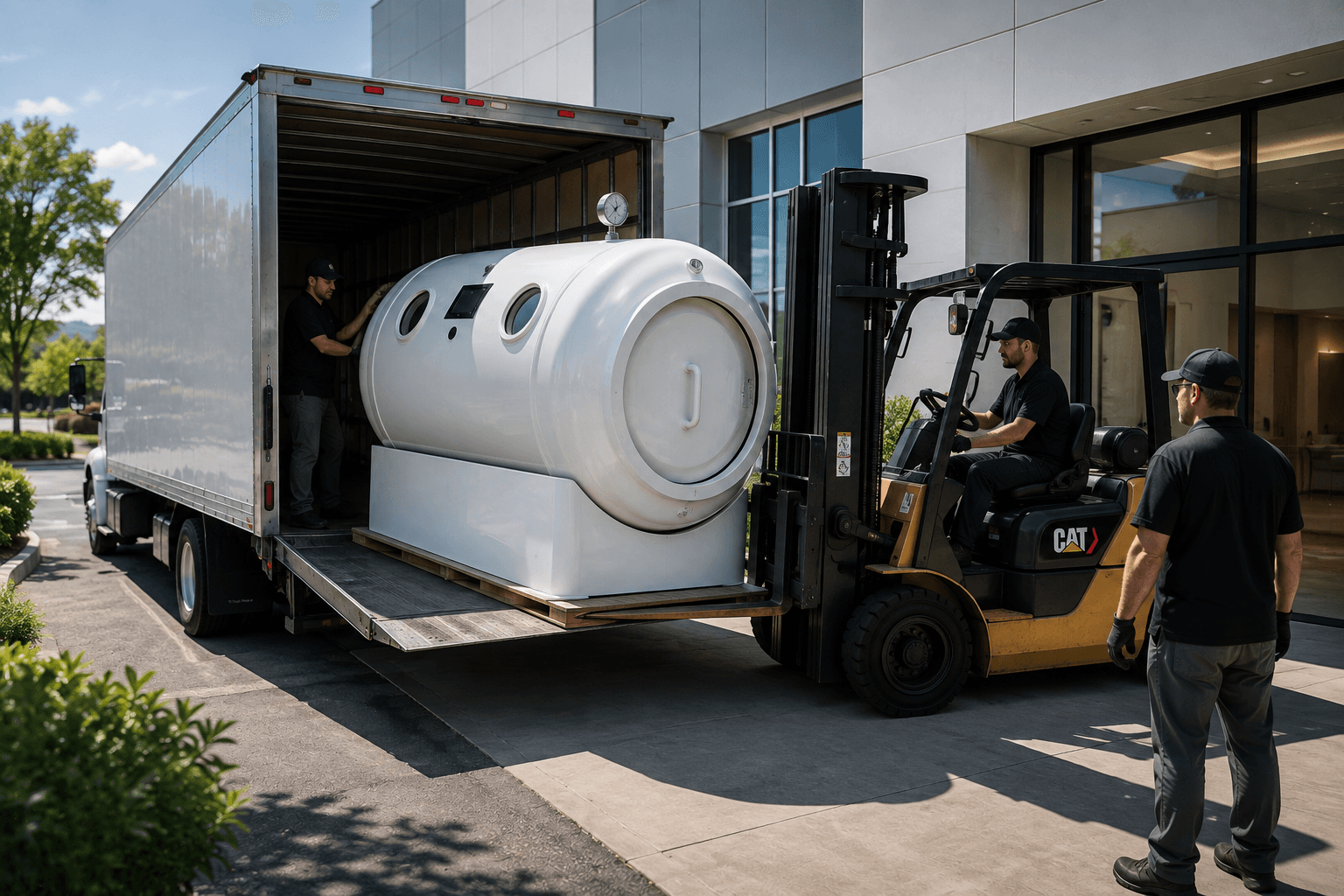
Commercial hyperbaric chambers are precision medical devices and require specialized transportation and handling.
Depending on the chamber size, delivery may involve:
Liftgate trucks
Forklifts
Rigging crews
Interior equipment movers
Cranes for challenging locations
Delivery logistics are typically coordinated well in advance to minimize disruption to your facility.
Step 4: Chamber Installation
Once inside the building, the installation team positions the chamber, completes assembly, and performs all required system connections.
Typical installation tasks include:
Chamber positioning
Mechanical assembly
Electrical connections
Communication systems
Oxygen integration
Pressure testing
Operational verification
Every system is tested before the chamber is placed into service.
Step 5: Commissioning and Testing
Before treating patients, the installation team verifies that the chamber operates according to manufacturer specifications.
This process often includes:
Pressure testing
Safety system checks
Leak inspections
Calibration
Documentation
Operational demonstrations
These final checks help ensure the system is functioning properly before clinical use.
Step 6: Staff Training
Even experienced healthcare professionals benefit from hands-on training specific to their equipment.
Training commonly covers:
Daily operation
Patient preparation
Safety procedures
Emergency protocols
Routine maintenance
Cleaning procedures
Documentation
A confident, well-trained team contributes to safer and more efficient day-to-day operations.
Step 7: Preparing for Your First Patient
Once installation and training are complete, attention shifts toward opening your program.
Many clinics use this time to:
Finalize operating procedures
Complete marketing activities
Notify referral partners
Train front-office staff
Schedule initial patient consultations
Conduct practice runs with the clinical team
If you're still evaluating the financial side of your project, revisit our Commercial Hyperbaric Chamber Cost: The 2026 Price Guide to compare startup expenses and understand where installation fits into your overall investment.
By the time your first patient arrives, both the equipment and your staff should be fully prepared.