Business Guide
Monoplace vs Multiplace Hyperbaric Chamber: Which Is Right for Your Facility?
Complete comparison of monoplace vs multiplace hyperbaric chambers. Capacity, cost, pressure rating, clinical use cases, and ROI for clinics and medical facilities. ATAMOX 40 vs Millennium Modular.

If you are evaluating adding hyperbaric oxygen therapy to your facility, one of the first decisions you will face is whether you need a monoplace or multiplace chamber. It is a fundamental equipment choice — and the right answer depends entirely on your facility type, patient volume, space, and clinical goals.
This guide gives you a complete, honest comparison of both chamber types so you can make an informed decision before requesting a consultation or committing to a purchase.
The Core Difference
A monoplace hyperbaric chamber treats one patient at a time inside a sealed pressurized vessel. A multiplace hyperbaric chamber treats multiple patients simultaneously — typically 4 to 12 — in a larger custom-built environment where staff can also be present during treatment.
That fundamental difference in throughput drives almost every other difference between the two: price, space requirements, staffing, clinical capability, regulatory complexity, and ideal use case.
Monoplace Hyperbaric Chambers
What They Are
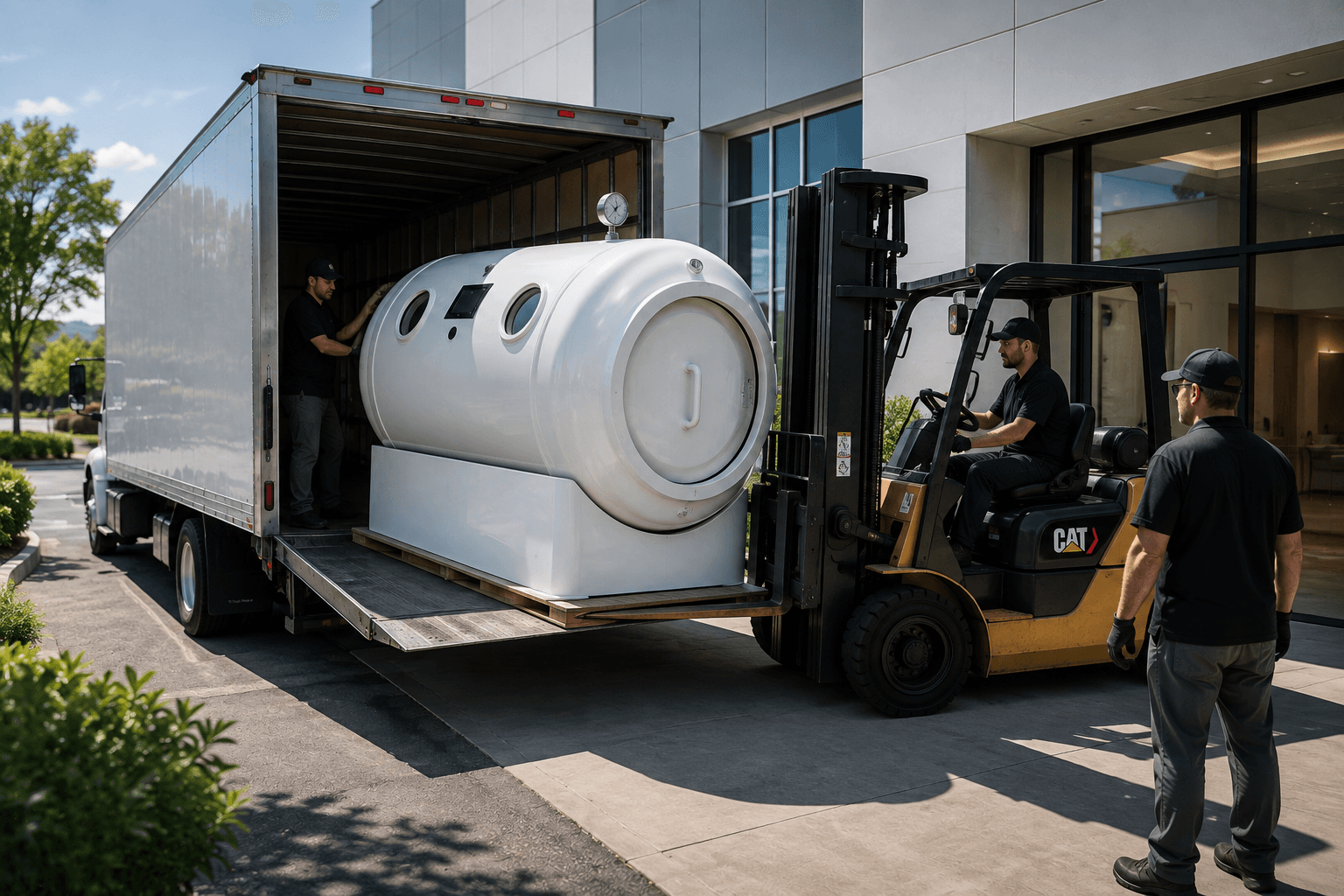
A monoplace chamber is a single-occupancy pressurized vessel — the patient enters alone, the chamber seals, and the session runs under controlled pressure. The operator monitors and controls the session from outside.
Modern monoplace chambers like the ATAMOX 40 have evolved significantly from earlier generations. The ATAMOX 40's mirrored internal and external controls allow patients to operate the chamber themselves independently — a capability that was previously unavailable at this pressure rating and that meaningfully reduces staffing overhead for high-volume practices.
Pressure Capability
Monoplace chambers vary widely in pressure capability. Entry-level soft shell units reach 1.3–1.5 ATA — suitable for basic wellness applications. Standard hard shell monoplace chambers reach 2.0–3.0 ATA. The ATAMOX 40 reaches 4.0 ATA — the highest pressure rating available on the market — which supports the full range of both wellness and medical-grade protocols.
Who Monoplace Chambers Are Best For
Monoplace chambers are the right choice for the majority of clinical and wellness buyers:
Med Spas and Wellness Centers Adding a monoplace chamber slots naturally into a med spa's existing service menu. Sessions pair with IV therapy, red light therapy, and aesthetics. The single-patient format fits the intimate, personalized treatment model that med spa clients expect. The ATAMOX 40 fits most existing treatment rooms without expansion.
Chiropractic Offices Chiropractic patients already have a recovery mindset and an established relationship with the practice. Adding monoplace HBOT generates incremental revenue from the existing patient base with zero new marketing spend. Most chiropractic practices reach break-even in under 12 months.
Plastic Surgery Practices Post-surgical recovery is one of the fastest-growing HBOT applications. At 4.0 ATA, the ATAMOX 40 supports the full range of post-surgical protocols — reducing swelling, accelerating tissue healing, and improving outcomes for complex procedures.
Sports Recovery Centers Performance-focused clients are among the fastest HBOT adopters. The self-treatment capability of the ATAMOX 40 is particularly well-suited to high-frequency athlete use — clients can complete sessions independently, reducing the staffing burden per session.
Functional Medicine Practices Longevity, neurological recovery, and inflammation reduction are core HBOT applications that align directly with functional medicine philosophy. Patients at these practices typically commit to multi-session protocols, generating strong lifetime value per client.
The ATAMOX 40 — Monoplace Specifications
Specification | ATAMOX 40 |
|---|---|
Price | $99,000 |
Pressure Rating | 4.0 ATA — highest on market |
Interior Diameter | 40 inches — largest monoplace available |
Interior Length | 88 inches |
External Dimensions | 46.5" W × 96" L |
Weight | 1,250 lbs — lightest FDA-cleared chamber available |
Window Rating | 10 ATA — exceeds all regulatory standards |
Air Turnover | Complete every 15 minutes — eliminates CO₂ buildup |
Oxygen Per Treatment | 1,100 liters — most efficient available |
Self-Treatment | Yes — mirrored controls inside and outside |
Maintenance | Almost maintenance free |
Safety Record | 20+ years, zero incidents |
FDA Clearance | 510(k) Cleared |
Certifications | ASME + PVHO — stamped on chamber |
Origin | Made in USA — 100% American steel |
Multiplace Hyperbaric Chambers
What They Are
A multiplace chamber is a custom-built pressurized room that accommodates multiple patients simultaneously. Unlike monoplace chambers where the patient breathes pressurized air directly, multiplace patients typically breathe 100% oxygen through masks or hoods while the chamber itself is pressurized with air. Clinical staff can accompany patients inside the chamber during treatment.
Multiplace chambers are engineered to the specific requirements of each facility — patient capacity, layout, accessibility, seating configuration, and clinical workflow are all customized. They are not off-the-shelf products. They are construction projects.
Pressure Capability
The Millennium Modular Multiplace is rated to 3.0 ATA — sufficient for the full range of FDA-approved medical indications and advanced clinical protocols. The slightly lower maximum pressure compared to the ATAMOX 40 monoplace reflects the engineering trade-offs inherent in designing for multiple-occupancy environments.
Who Multiplace Chambers Are Best For
Multiplace chambers are the right choice for facilities where patient throughput is the primary constraint:
Hospitals and Health Systems Hospitals with established HBOT programs or wound care departments require the throughput that only a multiplace system can deliver. Insurance reimbursement for FDA-approved HBOT indications makes hospital multiplace programs financially strong once established.
Wound Care Centers Diabetic wound healing, radiation injury, and compromised skin grafts are FDA-approved HBOT indications with established insurance reimbursement pathways. Wound care centers treating high patient volumes benefit significantly from multiplace throughput.
Military and VA Facilities TBI and PTSD treatment protocols for veterans represent a growing application of HBOT. Military and VA facilities treating these conditions at scale require multiplace capacity.
Large Rehabilitation Centers Facilities where HBOT is a core therapeutic offering rather than an add-on service need the throughput that monoplace chambers cannot provide. Multiplace systems allow HBOT to function as a high-volume department rather than a single-room service.
Research Institutions University hospitals and clinical research programs studying HBOT need chambers capable of running multiple simultaneous protocols, often at varying pressure levels within the same session.
The Millennium Modular — Multiplace Specifications
Specification | Millennium Modular |
|---|---|
Starting Price | $650,000 |
Patient Capacity | 4–12 patients simultaneously |
Pressure Rating | Up to 3.0 ATA |
Design Options | Single-lock or double-lock |
Customization | 100% custom — seating, flooring, layout |
Fire Suppression | Primary + secondary systems built in |
Certifications | FDA, ASME, PVHO-1 |
Best For | Hospitals, wound care, military, research |
Side-by-Side Comparison
Factor | ATAMOX 40 (Monoplace) | Millennium Modular (Multiplace) |
|---|---|---|
Starting Price | $99,000 | $650,000+ |
Patients Per Session | 1 | 4–12 simultaneously |
Pressure Rating | 4.0 ATA — highest on market | 3.0 ATA |
Space Required | 46.5" × 96" — fits most offices | Custom room construction required |
Setup Timeline | 6–10 weeks in existing space | Custom build — longer lead time |
Customization | Fixed design | 100% custom configuration |
Self-Treatment | Yes — mirrored controls | Staff supervision required |
Staff Requirements | Trained technician | Clinical staff required inside chamber |
Maintenance | Almost none | Regular service intervals |
Fire Suppression | Standard safety systems | Primary + secondary built in |
Best For | Clinics, med spas, chiro, sports, functional med | Hospitals, wound care, military, research |
FDA Clearance | 510(k) | FDA certified |
Certifications | ASME + PVHO | ASME + PVHO-1 |
Commission (8%) | $7,920 | $52,000+ |
The Revenue Comparison
Monoplace Revenue Model
A single ATAMOX 40 running at moderate utilization — 6 sessions per day at $200 per session — generates $26,400 per month gross. At 80% margin after operating costs, that is $21,120 per month net. Break-even on the $99,000 chamber occurs in under 5 months.
The monoplace model scales through pricing rather than throughput. Many practices in premium markets — Scottsdale, Miami, New York — price sessions at $300–$500, taking the same 6 sessions per day to $39,600–$66,000 per month gross.
Multiplace Revenue Model
A multiplace system's revenue scales with patient throughput. Running 8 patients simultaneously at $200 per session across 6 sessions per day generates $9,600 per day — $211,200 per month gross. At a facility where HBOT is a core clinical service with established insurance reimbursement, the multiplace model delivers revenue that no monoplace system can match.
The trade-off is the investment required to reach that revenue. A $650,000+ chamber, custom room construction, additional clinical staffing, and the longer ramp-up time to fill a 12-patient system all require significantly more capital and planning than the monoplace model.
The Decision Framework
Here is a simple way to decide which chamber is right for your facility:
Choose the ATAMOX 40 monoplace if:
You operate an existing clinical or wellness practice with an established patient base
Your available space is a standard clinical room or treatment suite
You are adding HBOT as a new revenue stream rather than building a dedicated HBOT department
Patient throughput is not your primary constraint
You want to reach profitability as quickly as possible with minimum upfront investment
Choose the Millennium Modular multiplace if:
You operate a hospital, wound care center, large rehabilitation facility, or military medical program
You have the floor plan and capital for custom room construction
Your patient volume requires treating multiple patients simultaneously to meet clinical demand
HBOT is intended to be a core departmental offering rather than a single-room add-on
You are building or expanding a dedicated hyperbaric medicine program
What Most Buyers Get Wrong
The most common mistake is choosing a multiplace chamber because it seems more professional or more clinical than a monoplace system. For the vast majority of new HBOT businesses — even those with serious clinical aspirations — the ATAMOX 40 monoplace at $99,000 is the right starting point.
At 4.0 ATA, the ATAMOX 40 supports every protocol that most practices will ever need. Its 40-inch interior, self-treatment capability, and 20+ year safety record reflect a level of clinical engineering that exceeds many multiplace systems at a fraction of the cost.
The multiplace is a department-scale system. If you are building a department, it is the right choice. If you are adding HBOT to an existing practice or launching a new clinic, the monoplace almost always delivers faster ROI, lower startup risk, and equivalent clinical capability for your patient population.
Not Sure Which Is Right for Your Facility?
We help clinic owners and medical facility directors evaluate both options for their specific space, patient volume, and clinical goals. A free 15-minute consultation includes a custom ROI projection for your facility based on your actual session volume targets and local market pricing — for either chamber type.
There is no commitment required. The goal is to give you the numbers you need to make a confident decision.