Business Guide
How to Start a Hyperbaric Oxygen Therapy Business in 2026
Complete guide to starting an HBOT business in 2026. Startup costs, licensing overview, chamber selection, staffing requirements, and revenue projections for standalone clinics and add-on practices.

Hyperbaric oxygen therapy is one of the fastest-growing segments in the commercial wellness and medical space. The U.S. market is projected to reach $1.72 billion by 2034, growing at over 7% annually. Clinics, med spas, and medical facilities across the country are adding HBOT as a high-margin revenue stream — and new standalone hyperbaric businesses are opening at a pace not seen in previous years.
If you are evaluating starting a hyperbaric oxygen therapy business in 2026, this guide covers everything you need to know before committing to anything: the two business models available to you, realistic startup costs, licensing requirements, chamber selection, staffing, and revenue projections based on real utilization data.
The Two Paths: Standalone Clinic vs. Add-On to Existing Practice
The single most important decision in starting an HBOT business is whether you are building from scratch or adding hyperbaric therapy to an existing practice. These are fundamentally different business models with different startup costs, timelines, and risk profiles.
Path 1: Add-On to an Existing Practice
This is the fastest path to profitability and the approach we recommend for most buyers.
If you already operate a med spa, chiropractic office, plastic surgery practice, physical therapy clinic, functional medicine practice, or sports recovery center — you already have the three things that take standalone clinics months or years to build: patients, staff, and trust.
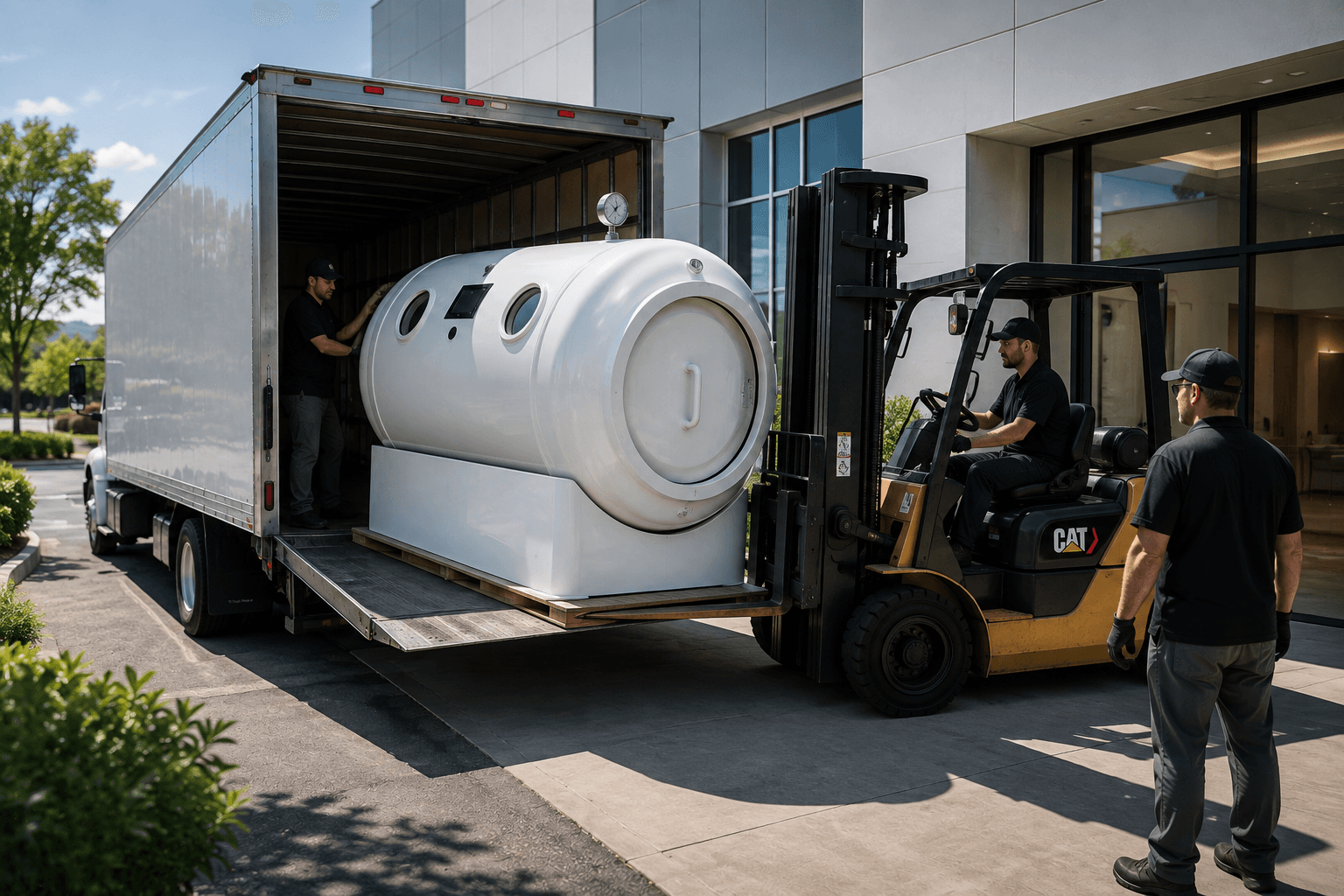
Adding the ATAMOX 40 monoplace chamber to an existing practice means:
Your existing patients are your immediate market — no new patient acquisition needed to start
Your fixed overhead is already covered — the chamber adds revenue without adding proportional cost
Your staff can be trained to operate sessions without hiring new clinical headcount
Most practices with established patient bases reach break-even in under 6 months
The math: A chiropractic office with 100 active patients where 20% book one HBOT session per week at $150 per session generates $3,000 per week — $12,000 per month — from patients who are already walking through the door. No Google Ads. No new marketing. Just a room and a chamber.
Path 2: Standalone Hyperbaric Clinic
A standalone HBOT clinic is a viable business but requires more capital, more marketing investment, and a longer ramp-up to consistent profitability.
Without an existing patient base you are starting from zero. You need to build awareness, generate leads, and convert first-time patients — all while your fixed costs run. Plan for 6–12 months before reaching consistent monthly profitability.
Standalone clinics work best in markets where HBOT awareness is already high, where the competitive landscape is thin, and where the operator has a strong marketing background or budget.
Startup Costs: What You Actually Need to Invest
Here is a realistic startup cost comparison between the two paths:
Cost Item | Standalone Clinic | Add-On to Existing Practice |
|---|---|---|
Chamber — ATAMOX 40 monoplace | $99,000 | $99,000 |
Location / lease deposit | $20,000–$60,000 | $0 (existing space) |
Room buildout | $15,000–$40,000 | $5,000–$15,000 |
Licensing and legal | $3,000–$8,000 | $1,000–$3,000 |
Equipment and supplies | $5,000–$10,000 | $2,000–$5,000 |
Marketing (first 6 months) | $10,000–$30,000 | Minimal — existing patient base |
Working capital reserve | $30,000–$50,000 | $10,000–$20,000 |
Total Startup Investment | $182,000–$297,000 | $117,000–$142,000 |
The add-on model saves $65,000–$155,000 in startup costs and eliminates the primary risk that kills standalone clinic launches: running out of capital before the patient pipeline is established.
What About Multiplace Chambers?
If your facility has the patient volume and floor plan to support treating 4–12 patients simultaneously, the Millennium Modular Multiplace starts at $650,000. This is a different investment category — designed for hospitals, wound care centers, and large medical facilities where HBOT is a core clinical offering rather than an add-on revenue stream. Startup costs for a multiplace facility scale accordingly and involve more significant room construction and regulatory requirements.
Licensing Overview: What You Need to Operate Legally
Licensing requirements for HBOT businesses vary significantly by state and by the pressure levels you intend to operate. This is one of the most misunderstood aspects of starting an HBOT business, and getting it wrong is expensive.
Important: This section provides general guidance only. Before committing to a business model, consult a healthcare attorney licensed in your state. Requirements are evolving rapidly as the industry grows and regulators catch up.
Pressure Level Determines Most Requirements
1.3–1.5 ATA (Wellness Range) At wellness pressure levels, most states do not require physician supervision, medical facility licensing, or clinical staff to operate sessions. A trained HBOT technician — not a physician — can run sessions at these pressures in most jurisdictions. This is the operating range for most med spa, chiropractic, and wellness applications.
2.0+ ATA (Medical Range) At medical pressure levels, requirements become significantly more stringent. Most states require physician oversight, medical facility licensing, and in some cases specific HBOT facility certification. If you intend to bill insurance for HBOT services — which requires operating at medically approved protocols — physician involvement is mandatory.
4.0 ATA (The ATAMOX 40) The ATAMOX 40 is rated to 4.0 ATA, giving operators the flexibility to run both wellness protocols at lower pressures and full medical protocols at higher pressures. This flexibility is valuable — you can start with wellness-level sessions and expand to medical protocols as your practice grows and your licensing is in place.
FDA Clearance and Chamber Certification
Your chamber must carry FDA 510(k) clearance for commercial clinical use. This is non-negotiable. The ATAMOX 40 carries full FDA 510(k) clearance, ASME certification, and PVHO certification — all stamped directly on the chamber with serial numbers for on-site verification.
Do not purchase a non-certified chamber for commercial use. Following recent safety incidents involving uncertified equipment in clinical settings, regulators and insurers are scrutinizing chamber certification more closely than ever.
Choosing the Right Chamber for Your Business
Chamber selection is the most important equipment decision you will make. Here is how to evaluate it:
For Individual Clinics and Practices: The ATAMOX 40
The ATAMOX 40 is the right chamber for the majority of new HBOT businesses — whether standalone clinics or add-on practices. Here is why:
4.0 ATA pressure rating. The highest available on the market. Most competitors max out at 2.0–3.0 ATA. This gives you full protocol flexibility from day one and positions your practice at the clinical leading edge.
40-inch interior diameter. The largest monoplace interior available. Patient comfort directly impacts
treatment completion rates — and treatment completion rates directly impact your revenue and outcomes.
Self-treatment capability. Every valve is mirrored inside and outside the chamber. Patients can operate it independently and safely. This reduces staffing overhead significantly for high-volume practices.
Almost maintenance free. The ATAMOX 40 has a 20+ year perfect safety record and is engineered specifically for low maintenance. For a new business managing cash flow carefully, this matters.
Made in America. 100% American steel. The build quality difference between the ATAMOX 40 and comparable imported chambers is immediately apparent and contributes directly to its safety record and longevity.
For Hospitals and Large Facilities: The Millennium Modular
If your facility requires treating multiple patients simultaneously — wound care programs, hospital HBOT departments, large rehabilitation centers — the Millennium Modular Multiplace is the right system. Custom-configured for 4–12 patients, FDA/ASME/PVHO-1 certified, with dual fire suppression built in. Starting at $650,000.
Space Requirements
Many new HBOT business owners are surprised by how modest the space requirements are for a monoplace chamber.
The ATAMOX 40 measures 46.5 inches wide by 96 inches long externally. It fits most standard clinical rooms — a converted treatment room, a dedicated therapy room, or a large office space — without requiring facility expansion.
You will need:
Minimum room dimensions: approximately 12 x 16 feet including operator space
Ceiling height: 7 feet minimum
Electrical: 220V connection (standard in most clinical environments)
Ventilation: adequate air exchange for the room size
Most existing clinics can accommodate the chamber in existing space with minimal room preparation. We assess your floor plan as part of the consultation process.
Staffing Requirements
For Wellness-Level Protocols (1.3–1.5 ATA)
A trained HBOT technician is sufficient. Most states allow trained staff to operate chambers at wellness pressure levels without clinical credentials. The ATAMOX 40's self-treatment capability further reduces staffing overhead — patients can manage sessions independently after initial training.
Staff training for one member is included with every ATAMOX 40 purchase. They will be trained on safe operation, client intake, contraindication screening, and session management before your first paying client.
For Medical-Level Protocols (2.0+ ATA)
A physician or licensed clinical staff member must be available for supervision. Specific requirements vary by state. Consult a healthcare attorney for your jurisdiction.
Revenue Projections: Three Scenarios
Based on real utilization data from operating HBOT practices, here are three revenue scenarios at different session volumes:
Scenario | Sessions/Day | Session Price | Monthly Gross | Break-Even | Year 1 Net Profit |
|---|---|---|---|---|---|
Conservative | 3 | $200 | $13,200 | 9–10 months | ~$40,000 |
Moderate | 6 | $200 | $26,400 | 4–5 months | ~$152,000 |
Strong | 10 | $200 | $44,000 | 3 months | ~$322,000 |
Figures based on 22 working days per month and ~20% operating cost ratio.
Pricing Your Sessions
Session pricing varies by market, practice type, and protocol level. General ranges in 2026:
Wellness and recovery sessions: $150–$250 per session
Medical-grade protocol sessions: $250–$500 per session
Scottsdale, Paradise Valley, and premium urban markets: $300–$500 per session
Package pricing (10 sessions): 10–15% discount from single session rate
Monthly membership (4–8 sessions): $600–$1,500 per month
Starting at the lower end of your market's range and building toward premium pricing as your reputation develops is generally the right approach for a new HBOT business.
The Fastest Path to Profitability
Every data point from operating practices points to the same conclusion: the fastest path to HBOT profitability is adding a chamber to an existing practice with an established patient base.
You skip the marketing ramp-up entirely. You leverage trust you have already built. You convert existing patients to a new high-margin service. You reach positive cash flow in weeks rather than months.
A chiropractic office, med spa, or functional medicine practice with 100+ active clients can reach the moderate utilization scenario — $26,400 monthly gross — within the first 30–60 days of operation. That is not a projection. It reflects what happens when you introduce a compelling new service to an audience that already trusts you.
Standalone clinics can absolutely reach these numbers — it just takes longer and costs more to get there.
Common Mistakes to Avoid
Buying a non-certified chamber to reduce upfront cost. This exposes you to significant liability, complicates insurance, and following recent industry safety incidents, raises immediate red flags with regulators and patients. The ATAMOX 40's certifications are not a premium feature — they are the minimum standard for commercial clinical use.
Underestimating marketing investment for a standalone clinic. Without an existing patient base, you need a marketing budget. The most common reason standalone HBOT clinics take longer than expected to reach profitability is running out of capital before the patient pipeline is established. Build your marketing budget into your startup cost projections from day one.
Setting session prices too low at launch. Discounting to drive initial bookings trains your market to expect cheap HBOT. Start at a defensible price point and offer introductory packages rather than blanket discounts. It is far easier to maintain pricing than to raise it after you have established a low-price expectation in your market.
Not having a clear referral strategy. Physicians, physical therapists, and other healthcare providers are your most powerful referral sources. Building relationships with referring providers before you open — not after — is one of the highest-leverage activities in launching a new HBOT business.
Next Steps
Starting a hyperbaric oxygen therapy business is a significant decision. The right approach is to model your specific numbers before committing — your space, your existing patient volume if applicable, your local market pricing, and your session goals.
We provide free consultations that include a custom ROI projection for your specific facility, a full chamber specification walkthrough, financing options, and a licensing overview for your state. There is no commitment required and no pressure to purchase. The goal is to give you the information you need to make a confident decision.